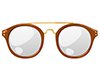
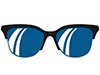
You’ve been thinking about buying new sunglasses, but the options are dizzying. There are so many frame choices, and so many types of lenses. And what about UV protection, coatings, polarization and tints?
Style is a very personal choice. This guide can help you understand some of the options available to you when you’re shopping for new sunglasses. And you’ll find out how to care for them once you’ve made your choice. Let’s get started.
Why your eyes need sun protectionThe single most important reason to wear sunglasses is to protect your eyes from the sun’s ultraviolet (UV) rays. Long-term exposure to UV rays has been linked to the development of serious eye issues, including macular degeneration and cataracts.
Protecting your eyes from the sun’s damaging rays is important. To do so, wear sunglasses that block nearly 100% of UVA and UVB rays (also called UV 400 protection) when you are outside during the day. Even when the skies are cloudy, it’s important to wear sunglasses. You can’t depend on the clouds to stop the UV rays from getting through.
Three types of UV radiation can damage your eyes. Each form has different characteristics and potential effects:
UVC rays pack the highest amount of energy and present the most danger to your eyes. Luckily, the Earth’s ozone layer prevents the majority of UVC rays from reaching its surface. However, you can still be exposed to UVC radiation through artificial sources, such as germicidal lamps and certain lasers.
Some of the lower-energy UVB rays are also filtered by the atmosphere’s ozone layer. However, other UVB rays do get through. UVB radiation overexposure is linked to several eye conditions, including photokeratitis (snow blindness), pterygium (surfer’s eye) and pinguecula.
Of the three types of UV rays, UVA rays contain the lowest amount of energy. However, UVA rays can travel through your cornea to reach the natural crystalline lens, and a small amount may potentially reach the retina at the back of your eye. In addition, excess UVA radiation is connected to the emergence of specific forms of cataracts and may play a role in other eye conditions.
Spending time outdoors can increase your risk of UV radiation-related eye conditions. However, your actual UV radiation dose depends on several factors, including:
When you’re shopping for sunglasses, ensure that you choose a pair that provides enough eye protection. The American Optometric Association offers these tips:
SEE RELATED: Different types of sunglasses: Styles, shapes & top choices
Sunglasses design and constructionWhen you go pick out a new pair of sunglasses, you’ll have a lot of options. The brand and the style of the frame are just the first of several choices you can make.
High-quality sunglass frames are often made from durable, commonly available materials. Lightweight plastic frames are less likely to slide down your face, and they are well-suited to different types of lenses. Metal frames can add a distinctive touch to wire-rimmed sunglasses.
If you’re in the market for sunglasses, you may have already made your sunglass frames selection. To determine which lenses are optimal, your eye doctor can help guide you during an eye exam.
If you don’t have 20/20 vision, prescription sunglasses present a stylish solution that combines vision correction with protection from the sun. An optometric lab will fabricate the glasses using your chosen frame style and the prescription information from your eye exam. When delivered, your prescription sunglasses can provide an eyewear solution along with a fashion statement.
If you don’t need vision correction, you’re a candidate for non-prescription sunglasses. Also called plano sunglasses, these shades aren’t used to correct your vision.
However, wearing UV-protected plano sunglasses helps keep your eyes safe from the sun’s harmful rays while accessorizing your wardrobe. Consider a style that complements the shape of your face, fits your lifestyle and matches your personality.
Plano sunglasses are sold at many different places, from the convenience store down the street to online retailers and your local optometrist. Whichever sunglasses you choose, make sure they have 100% UVA and UVB (or UV 400) protection.
Many eyewear manufacturers offer several different types of lens materials, each with its own characteristics. In many cases, you can add additional coatings or treatments to address certain limitations of a lens material.
Relatively thick, heavy glass lenses deliver high-level optical clarity. They’re also resistant to scratches. However, glass lenses can easily shatter or chip. They also require an extra coating to reach the 100% UV protection threshold.
These lenses are lightweight and often thinner than comparable glass lenses. Some high-index lenses have 100% UV protection built in, but it may need to be added for those that don’t. Because the lens material is relatively soft and very reflective, scratch-resistant and anti-reflective coatings may be recommended.
Highly impact-resistant polycarbonate lenses are typically 100% UV-protective, and they’re lighter and thinner than most other lens types. However, polycarbonate lenses scratch easily and typically require a scratch-resistant coating. They may also benefit from an anti-reflective coating.
By minimizing light reflection and glare, polarized sunglasses can make colors appear brighter and more saturated. They can also make it easier to see objects below the surface of a lake, stream or other body of water.
The lab can add polarization to the lens during the fabrication process. Note that polarized sunglasses can interfere with viewing LCD screens like those on many car instrument panels and smartphones. They are also not recommended when you are navigating icy roads.
Sunglass lenses are frequently treated with one or more special lens coatings, such as:
The color of the lenses is one of the primary characteristics of sunglasses. While certain tints are recommended for particular activities, lens color is mostly a personal preference and doesn’t affect how well the sunglasses protect your eyes from UV rays.
Other than just liking the way you look in red (or blue or orange) lenses, why should you choose one color over another? Here are the most common lens colors:
Another option you’ll have when buying sunglasses is a mirrored lens. Mirrored lenses have a very thin coating that reflects light. Silvered aviator sunglasses are one classic example.
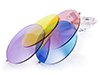
Today, you have a lot more choices than just silver, including blue, orange, red, green and more and — in some cases — gradients between two or more of these colors.
Mirrored lenses, especially bold colors and gradients, are primarily a style choice.
Privacy is another reason mirrored lenses are popular. They’re more opaque than standard sunglass lenses, so they can lend a little additional anonymity.
Taking care of your sunglassesTo keep your sunglasses in good condition for years to come, it’s important to keep them clean, protected and in proper repair.
When you’re on the go, clean your sunglasses with a microfiber cloth or disposable lens-cleaning wipe. Avoid cleaning your sunglasses with:
These items can scratch your sunglass lenses, which could affect your ability to see through them clearly.
Consider keeping an adequate supply of lens-cleaning wipes, lens cleaner spray and microfiber cloths on hand. Local drugstores and supermarkets often carry these eyeglass-cleaning supplies.
READ MORE: Sunglasses diagram
When you’re not wearing your sunglasses, store them in a protective, hard-shell sunglasses case. This practice can significantly reduce the risk of damage and help ensure that you get years of service from your eyewear.
If your sunglasses get scratched or the frames become damaged, it may be possible to fix them yourself, but it could also lead to further damage. In most cases, it’s recommended to consult an optician or the manufacturer. They can help safely repair your glasses or, if needed, order replacement parts.
Start with an eye examBefore purchasing sunglasses, consider scheduling an eye exam with an eye doctor if you haven't had an exam in a year or two. You might be considering non-prescription sunglasses, and even though you may see well enough, you might be able to see significantly better with prescription sunglasses.